10 Roofing Software Tools for NZ Roofers in 2026
Monday morning starts with three quote requests from the weekend, a crew without its next roof lined up, and an office that can’t tell you which jobs were won last month. The measurements are in one place, the customer’s messages are somewhere else, and nobody knows whether that promising re-roof enquiry came from Google Ads or a referral.
Roofing software should help you regain control, not create another inbox. But measuring a roof, pricing it, managing the sale and running the crew are different jobs. A polished estimating tool won’t necessarily stop missed follow-ups. A capable CRM won’t necessarily calculate your long-run roofing quantities.
These ten tools are sorted by the work they’re useful for, with the trade-offs that matter to a New Zealand roofing business. NZ-ready means more than accepting a New Zealand address: check local currency, GST handling, supplier coverage, accounting connections and support availability.
Call and form tracking need their own attention. An integration logo doesn’t prove that the original lead source will survive the journey from enquiry to paid invoice. For each tool, the practical question is whether you can connect the customer, quote, job outcome and revenue without asking the office to rebuild that history manually.
Table of Contents
- 1. QuoteCore+
- 2. NextMinute
- 3. Tradify
- 4. Roofr
- 5. AccuLynx
- 6. JobNimbus
- 7. Leap
- 8. RoofSnap
- 9. ServiceTitan
- 10. CompanyCam
- Roofing software at a glance
- Choosing Roofing Software Without Overbuying
1. QuoteCore+
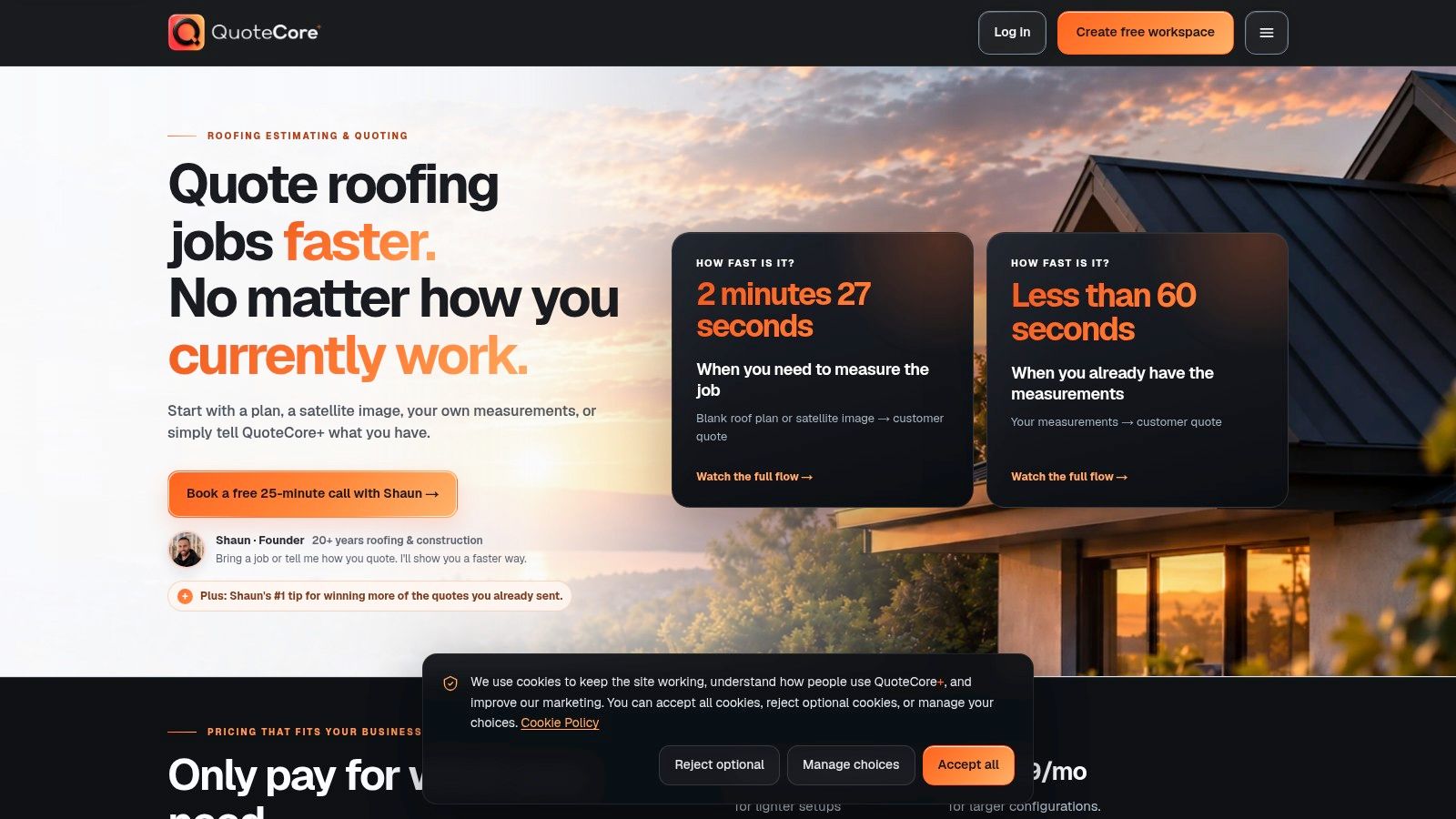
Best for NZ roofers whose main bottleneck is estimating. QuoteCore+ combines digital takeoffs, AI roof-plan scanning and reusable Smart Components with quotes, purchase orders, material ordering, job management and invoicing. Its New Zealand focus makes it a sensible starting point for long-run roofing and other measured trades.
QuoteCore+ publishes plans starting at NZ$29/month, with Pro at NZ$59 and Pro Plus at NZ$99, alongside free tools that don’t require signup or a card. Those free tools give you a way to assess the estimating approach before committing your pricing library.
Where it earns its place
- Repeatable pricing: Smart Components can help estimators reuse assemblies rather than rebuild familiar roof details.
- Local fit: Check the NZ supplier catalogue against your actual profiles, accessories and negotiated rates.
- Buying restraint: Assess higher-tier and AI functions against the plans and roof types you regularly price.
The limitation is scope. Don’t assume an estimating-led workflow gives you the same sales pipeline, communication history or follow-up controls as a dedicated roofing CRM.
Tracking check: Ask for a demonstration of how a phone or form enquiry becomes a quote. Confirm whether the original campaign, service type and customer identifier remain attached when the quote becomes a job and invoice.
2. NextMinute
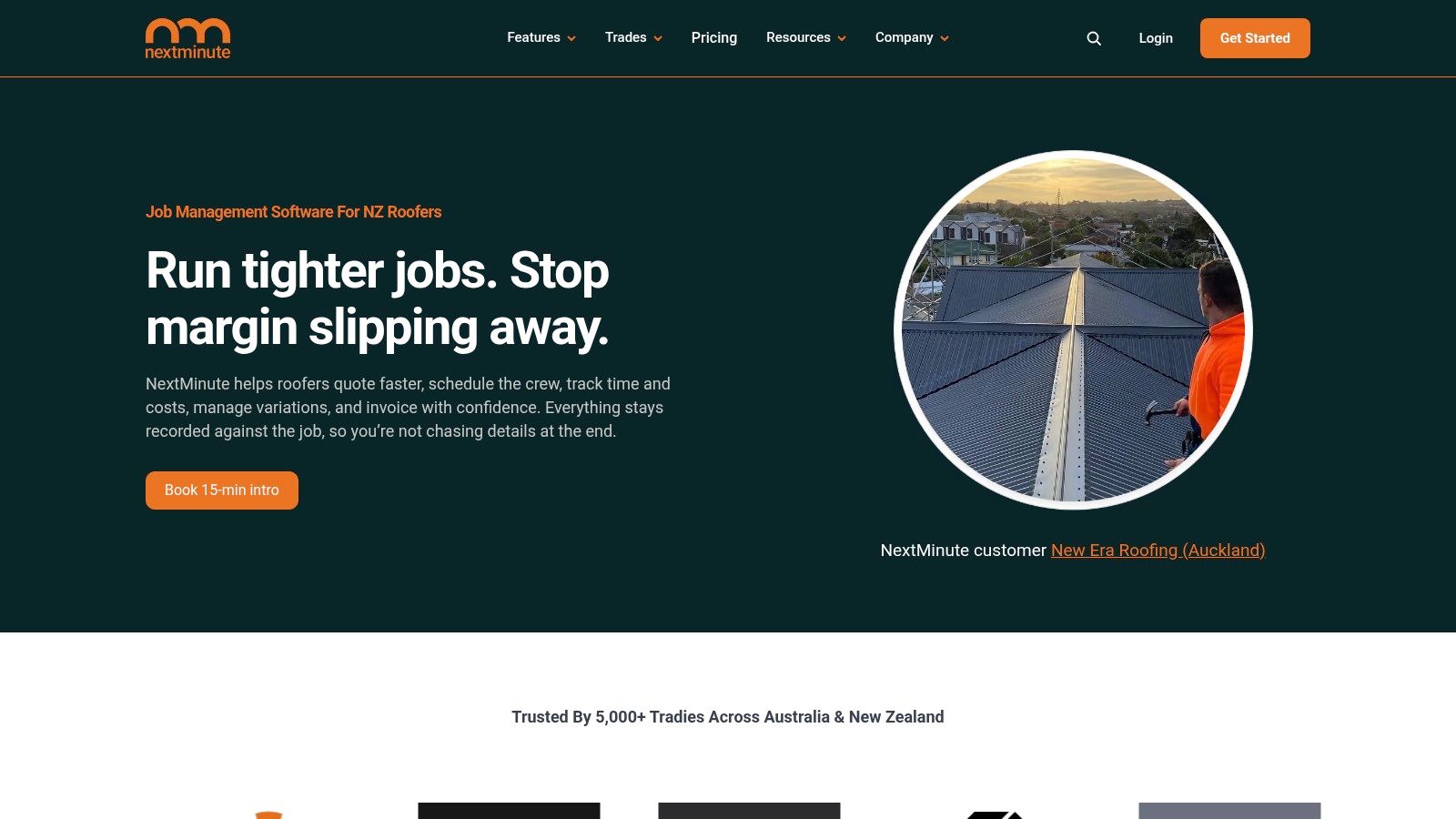
If the quote is straightforward but the handover to the crew isn’t, NextMinute is the more operational choice. It brings CRM, quotes, takeoffs, scheduling, timesheets, site photos and invoicing together with job costing, purchase orders and variations.
NextMinute’s NZ roofing offering lists NZ$199/month plus GST for 3–9 users and NZ$349/month for 10–14 users, with month-to-month plans, a 10-day trial, setup and training support, and an Auckland-based support team. Its accounting connections include Xero, MYOB and QuickBooks.
Practical rule: Test the handover from accepted quote to scheduled crew, not just how quickly someone can produce a quote.
NextMinute serves multiple construction trades rather than roofing alone. Its takeoff functions don’t make it a specialist roof-measurement service, so establish whether your estimating workflow needs a separate tool.
The minimum pricing band may also be difficult to justify for a solo operator. For a team, the more useful test is whether office staff and roofers can work from the same job information without duplicate entry.
Tracking check: Verify how external enquiries enter the CRM and whether source fields are available in exports. Accounting sync alone won’t tell you which advertising campaign generated a profitable roof replacement.
3. Tradify
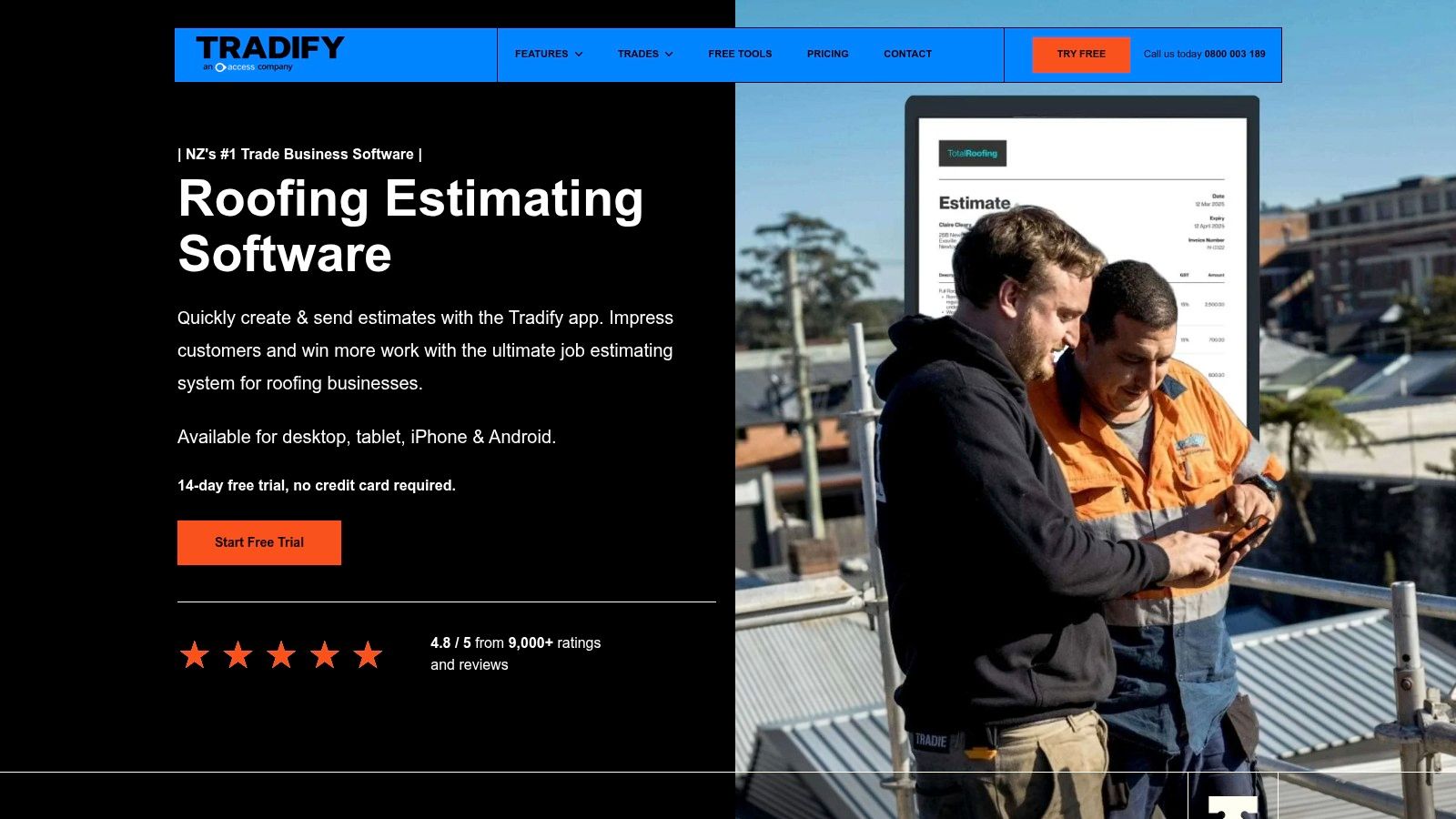
Tradify suits roofers who want general trade management rather than a roofing-only system. Quotes, invoices, scheduling and job tracking sit alongside reusable templates, price lists and kits. Its mobile app supports iPhone, iPad and Android, with syncing to Xero, MYOB and QuickBooks Online.
Tradify’s NZ roofing page lists pricing from NZ$48 per user/month excluding GST, month-to-month billing and a 14-day free trial, and the vendor reports a 4.8/5 rating from more than 9,000 ratings and reviews. Treat the rating as vendor-reported feedback, not proof that it fits your roofing workflow.
Price the whole team
Per-user billing is easy to understand, but the total grows as you give more people access. Establish who needs to create quotes, update jobs or enter time, and check separately charged functions such as SMS.
- Good fit: A roofing business replacing scattered calendars, quote documents and invoice records.
- Weaker fit: A company seeking aerial measurement or a highly specialised roofing sales CRM.
- Useful trial: Build a quote using your own material kits, then record a variation and invoice it.
Tracking check: Look beyond customer contact details. Test whether campaign source, call reference and enquiry type can travel into the job record and remain available when you report won work.
4. Roofr
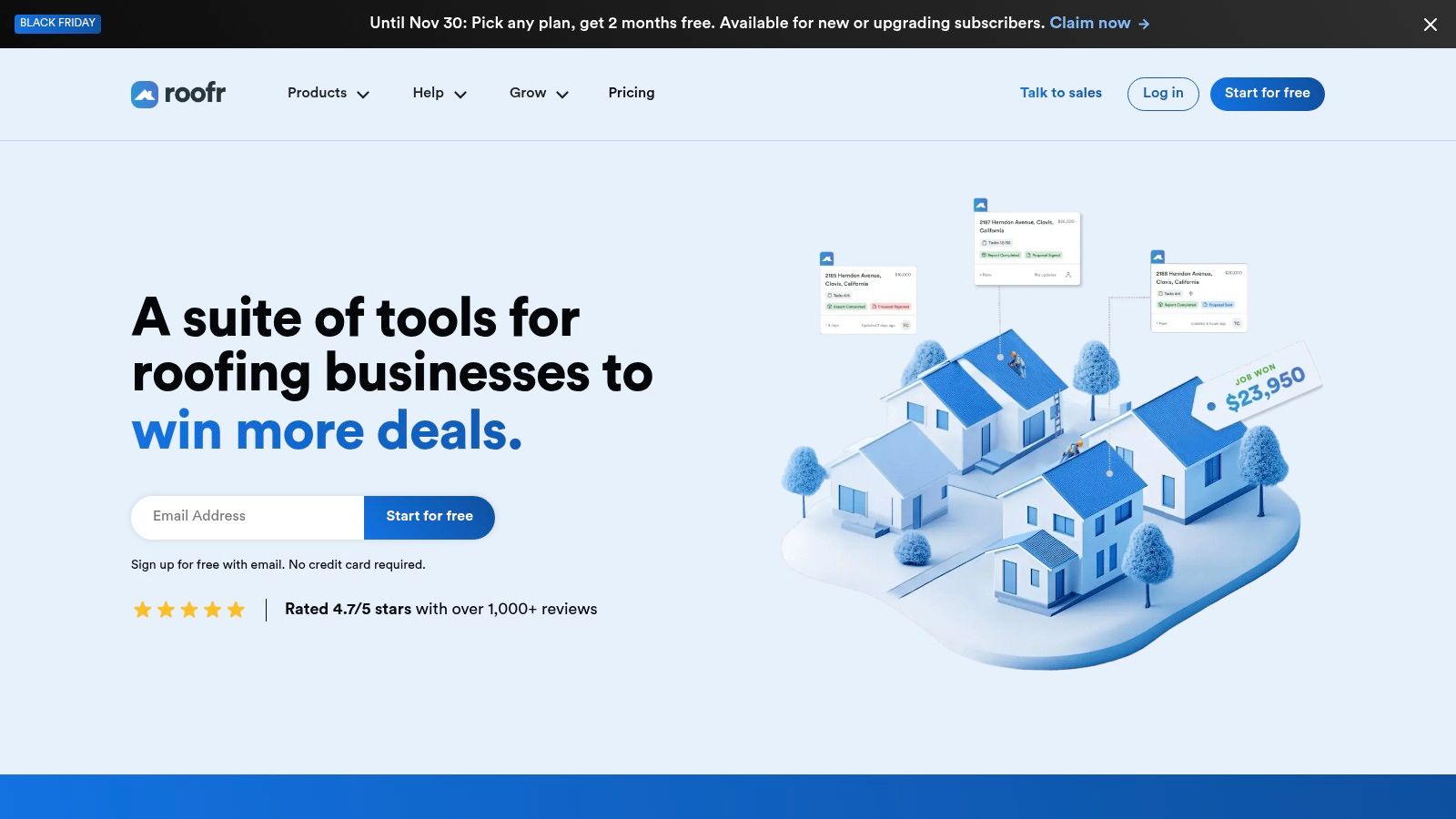
Roofr connects aerial measurements and material calculations to proposals, e-signatures, invoices, job boards and material ordering. That makes it worth considering for residential roofers who want measurement and sales tasks in one system. It is less suited to owners whose main need is managing office operations across different trades.
Roofr lists plans at US$0/month for Starter, US$249 for Essentials and US$349 for Scale, with unlimited users. Measurement reports cost US$19 on Starter and US$13 on paid plans. The free entry plan has no monthly fee, but report charges still need to be included when estimating your costs.
Check NZ coverage first
Enter addresses from your service area and confirm imagery coverage, report availability and whether measurements suit the roof materials you install. Pricing and available connections may reflect a US market, so check supplier, payment and accounting integrations for your business before committing.
Roofr’s mobile workflow is browser-based rather than native-app-first. Try it on the phones your crew uses, including photo uploads and opening documents on site.
Tracking check: Move an enquiry through the job board to an accepted proposal. Check whether campaign source and call details can be carried into the job record and exported for reporting. A measurement report helps with estimating; it does not identify where a lead came from.
5. AccuLynx
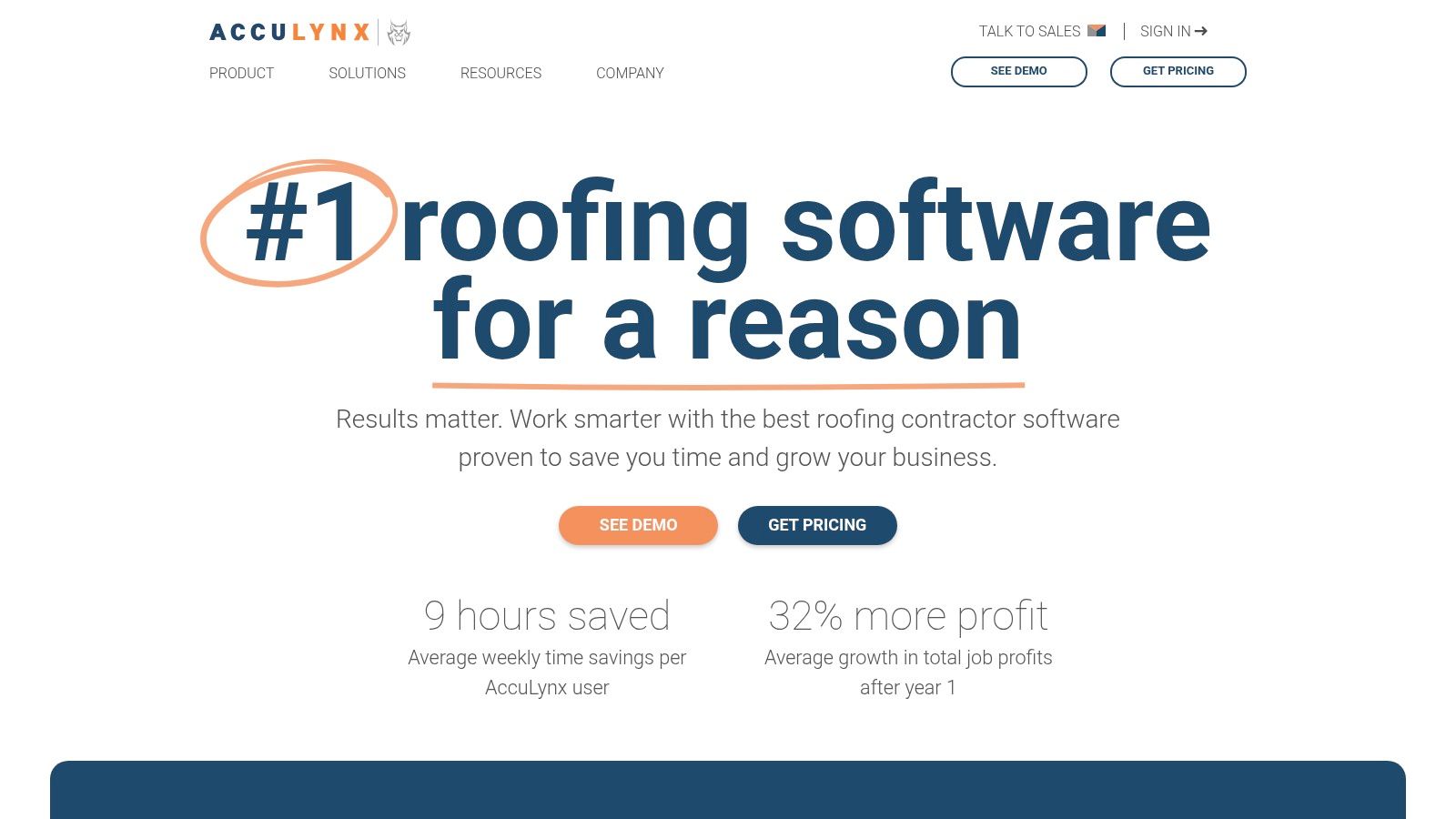
AccuLynx is a candidate for established roofing businesses with complicated sales and production handovers. Its roofing-specific CRM covers customer management, estimating, job milestones and sales-to-production workflows, alongside aerial measurement ordering and supplier connections.
AccuLynx publishes two plan levels with quote-based pricing, while Capterra’s listing records 4.6/5 from 847 reviews. Higher-tier capabilities include advanced reporting, automations and customisable workflows, with multi-location setup on Elite.
The benefit is breadth. The trade-off is that someone in your business must own configuration, permissions and consistent job updates.
- Demonstrate production: Move an accepted quote into material ordering, crew allocation and job milestones.
- Separate necessary features: Establish which workflow controls require the higher tier before comparing costs.
- Validate NZ dependencies: Confirm local aerial reports, suppliers, accounting support and insurance-related processes.
A roofing-specific feature isn’t automatically a New Zealand-ready feature.
AccuLynx deserves a closer look when several teams need a common operating record. It’s harder to justify if your immediate problem is producing quotes faster.
Tracking check: Request a complete example from tracked enquiry to closed job. Confirm whether source information survives reassignment, duplicate-customer merging and the transition from sales to production, and whether you can export the final job value.
6. JobNimbus
JobNimbus is strongest as a roofing and exterior-contractor pipeline system. Its configurable boards can help separate sales activity from production while keeping customer records, estimates, documents, e-signatures, invoices and communications connected.
JobNimbus lists a 14-day trial and uses quote-based pricing that varies with plan, users and add-ons; G2’s roofing-software category records 4.5/5 from 165 reviews. Reporting, automation, integrations and mobile access are part of its appeal, but tier structure and user limits make the final commercial proposal important.
Make the boards match your business
A roofer handling re-roofs, gutter replacements and restoration work shouldn’t force every enquiry through identical stages. Configure the stages around real decisions: inspection booked, quote sent, customer approved, materials confirmed and ready for production.
That flexibility also creates setup work. Too many stages encourage staff to skip updates, while too few hide stalled quotes.
Tracking check: Use the principles of marketing attribution to connect the original call or form enquiry with the eventual job result. A lead-source label is useful, but you also need a consistent identifier and a reliable won-job value.
For NZ use, verify supplier, accounting and messaging compatibility before designing the whole workflow around them. I’d prioritise a clean enquiry-to-job demonstration over an elaborate automation presentation.
7. Leap
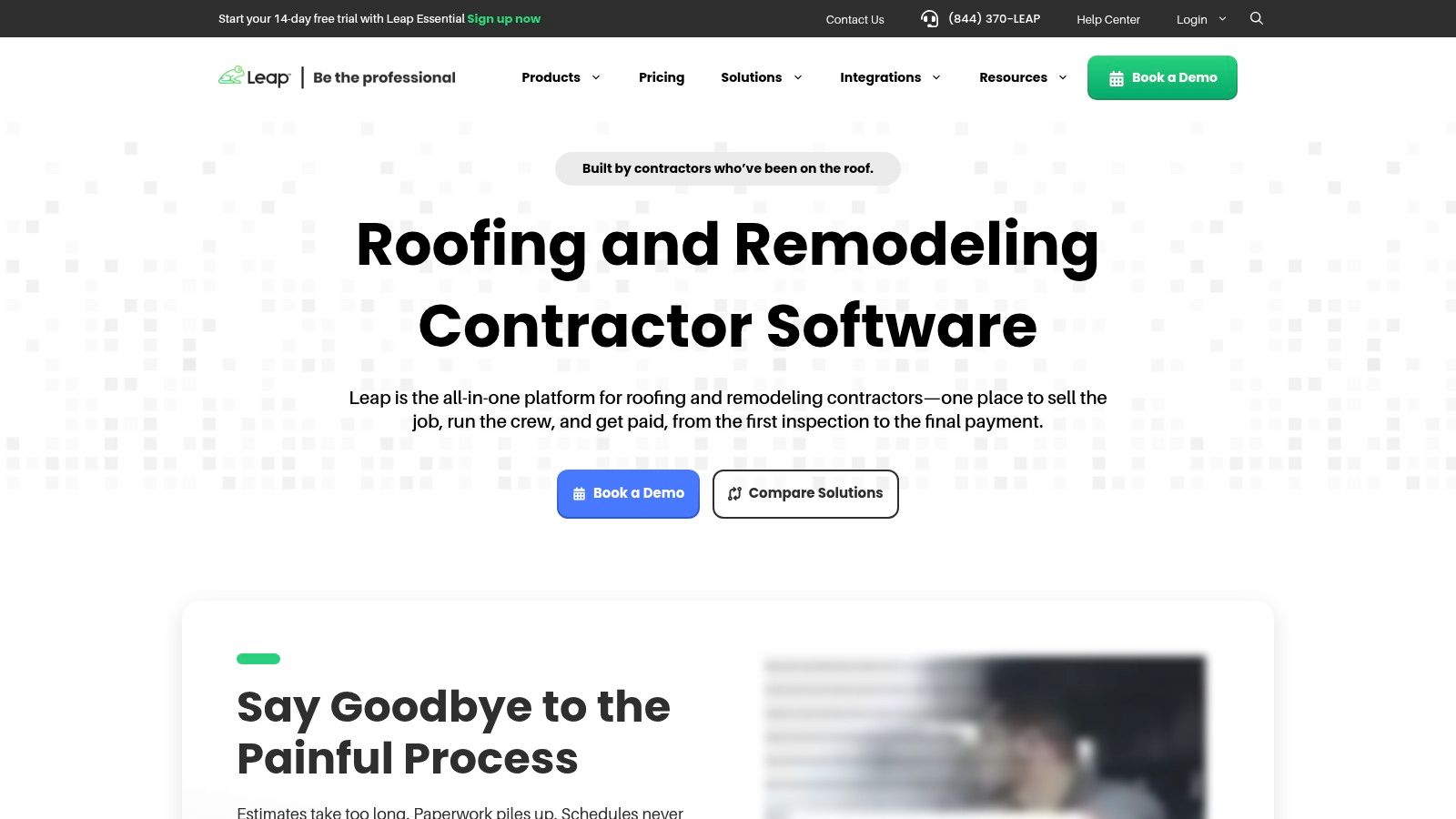
A salesperson needs a usable estimate and customer history. The production manager needs an agreed scope and a clear handover. Leap spans those needs, but you must distinguish Leap CRM from SalesPro before comparing quotes.
Leap lists CRM entry pricing from US$79/month, with pricing varying by product and team size. Its roofing and home-improvement offering includes lead handling, project management, digital estimates, customer communication, labour and materials pricing libraries, measurement integrations and mobile apps.
Buy the workflow, not the product name
- Sales requirements: Demonstrate pricing, estimate presentation and customer communication using your own roofing services.
- Delivery requirements: Confirm what the production team receives after acceptance and which product includes those functions.
- Commercial requirements: Get the included modules, users, contract terms and NZ integrations written into the quote.
Software Advice’s review summary identifies complexity and usability concerns among some users. That makes an ordinary staff member’s trial more informative than a polished demonstration run by the vendor.
Adaptable templates are valuable only if your team can maintain them. Don’t build a pricing library so elaborate that nobody trusts it after supplier rates change.
Tracking check: Establish where the original source is stored and whether it follows the customer between sales and project workflows. Also confirm whether the required integration belongs to the product and plan you’re buying.
8. RoofSnap
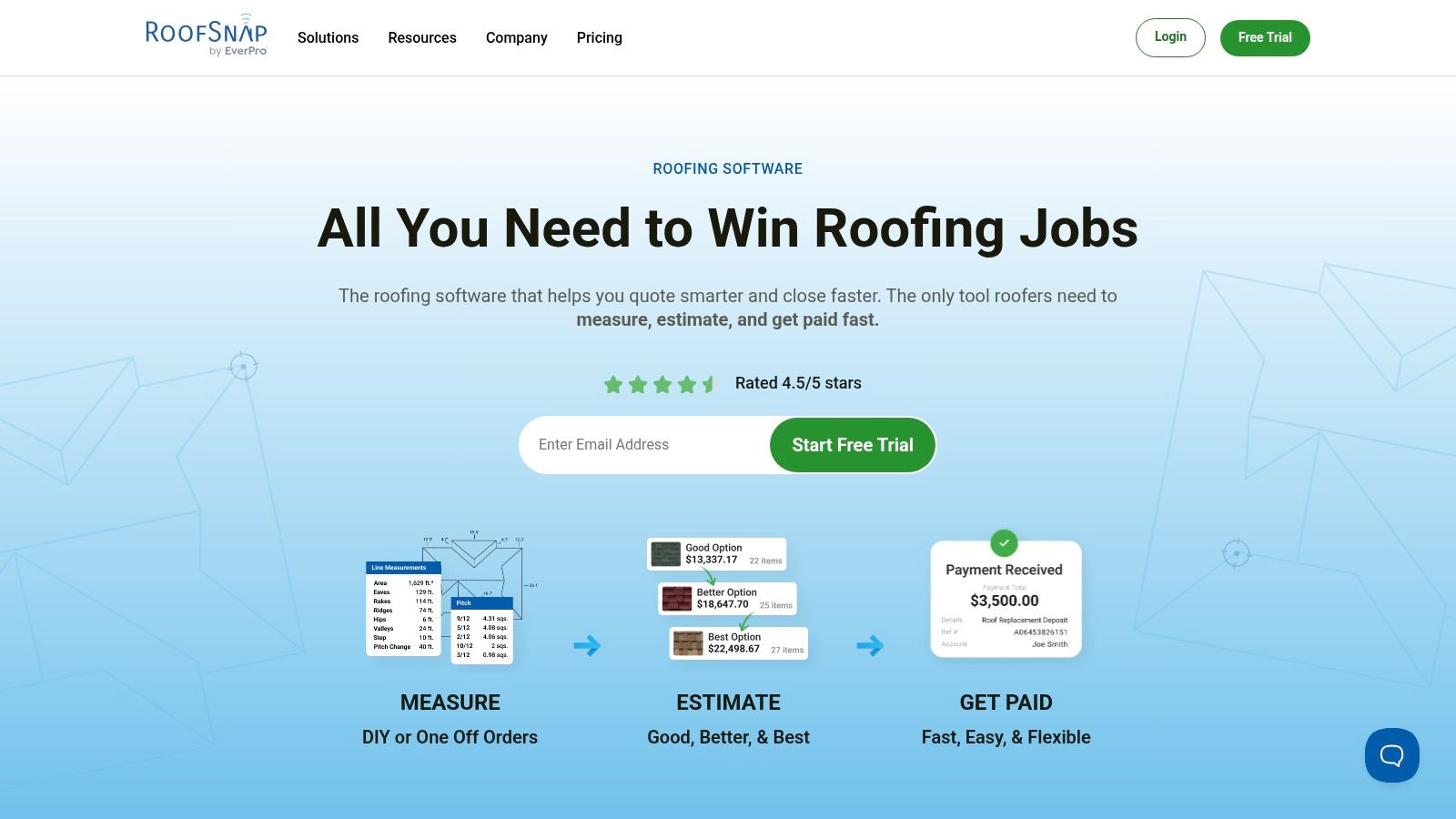
Choose RoofSnap for measuring and estimating, not for replacing the entire office. Its workflow supports DIY measurements and ordered reports, estimates built from your product list and pricing, and customisable customer reports, contracts and material orders.
RoofSnap offers subscription and pay-as-you-go report options, plus a free trial. The vendor also describes payment collection and financing features, but NZ businesses should confirm local availability rather than treating those as included local capabilities.
Buying advice: A focused estimating tool can be the right choice even when it doesn’t manage your leads. Keep the CRM responsible for the customer relationship.
The main cost question is how subscription and report charges interact with your quoting volume. The operational question is whether measurements and estimates move into your existing job system without retyping customer details.
Before relying on remote reports, test imagery coverage and report availability across your actual service area. Include a roof that represents the awkward work you quote, not only a simple rectangular example.
Tracking check: Keep the enquiry’s customer and job identifiers attached to the estimate. RoofSnap can help prepare the price, but the CRM or reporting setup still needs to connect that price to the original phone call, accepted job and eventual revenue.
9. ServiceTitan

ServiceTitan belongs on the shortlist for larger, multi-team operations, not automatically for a small roofing company that needs quicker quotes. Its broad field-service platform supports roofing and exteriors workflows, scheduling, customer records and wider operational management.
ServiceTitan explicitly supports roofing and exteriors, but pricing requires contacting the vendor. NZ availability, local accounting support and implementation requirements need confirmation before you invest time in detailed configuration.
Treat implementation as part of the purchase
A broad platform can bring several departments together. It can also demand more process definition, training and administration than a smaller roofing company can sustain.
- Operational fit: Demonstrate crew scheduling, customer records and handovers across the exterior trades you offer.
- Local fit: Confirm currency, accounting connections, support arrangements and the functions available in New Zealand.
- Implementation fit: Identify who will configure the system, clean existing records and train staff.
Tracking check: Review call tracking software alongside the operational demonstration. You need to establish how external call records, campaign information and web enquiries reach the customer record, not merely whether someone can log a phone conversation.
A job-management platform may show that a roof was completed without knowing which advertisement generated it. Require a demonstration that connects the incoming enquiry to the booked job and its value.
10. CompanyCam
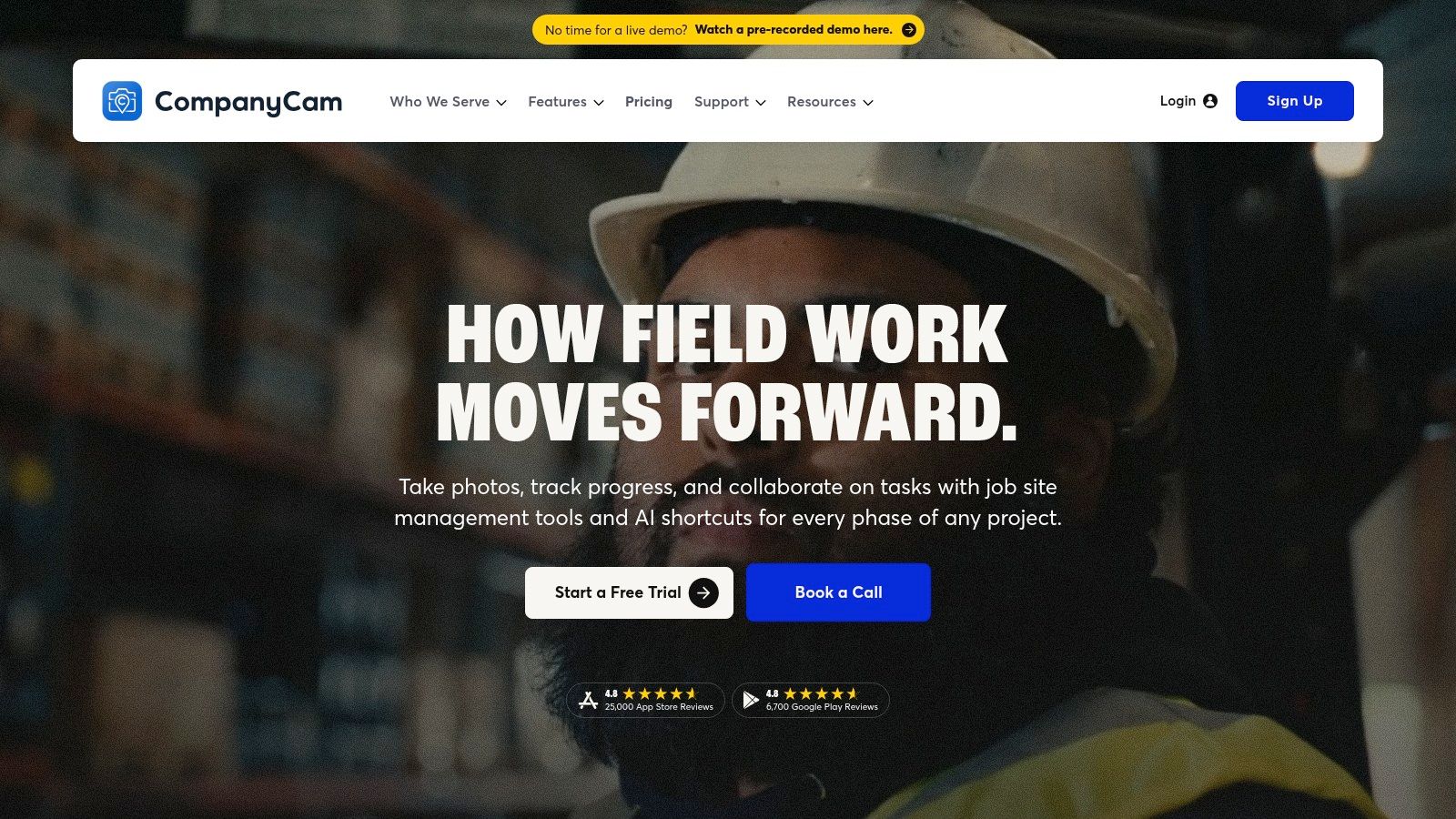
When inspection photos live on personal phones, the problem isn’t necessarily your CRM. CompanyCam is a jobsite documentation tool that organises timestamped photos and videos into project histories, with annotations, photo reports and client-facing updates.
CompanyCam publishes annual-billing prices of US$63/month for Core and US$119/month for Crew. Its offering includes offline capture with later syncing and contractor-software integrations, including Roofr and Contractor Foreman.
Useful alongside, not instead of
CompanyCam doesn’t replace estimating, lead management or full job management. Its value is giving the office and field team a usable visual record of inspections, progress and completed details.
- Good reason to add it: Your existing system makes roof photos difficult to organise, find or share.
- Poor reason to add it: Your current job platform already handles field documentation well and staff use it consistently.
- NZ consideration: Check current plan inclusions, USD billing and payment availability before committing.
For a re-roof, test how the team records existing damage, strip-off conditions, flashings and completed work. Then check whether the office can find that history without messaging the installer.
Tracking check: Connect photos through the job identifier or project record. Documentation can explain what happened on site, but it won’t establish the original marketing source unless your connected CRM already holds that information.
Roofing software at a glance
| Item | Published starting price | Free trial or free tier | Best for |
|---|---|---|---|
| QuoteCore+ | NZ$29/month | Free tools available without signup or a card | NZ roofers wanting estimating and job workflows |
| NextMinute | NZ$199/month for 3–9 users, plus GST | 10-day free trial | NZ construction teams managing jobs from quote to completion |
| Tradify | NZ$48 per user/month | 14-day free trial | Trade businesses needing general job and invoice management |
| Roofr | US$0/month for Starter | Free Starter plan | Roofers connecting measurements to proposals and job tracking |
| AccuLynx | Quote-based; not publicly listed | Not stated | Established roofing firms with complex workflows |
| JobNimbus | Quote-based; varies by plan and team | 14-day trial | Roofing and exterior contractors managing leads and jobs |
| Leap | US$79/month for Leap CRM | Not stated | Roofing contractors combining sales and project workflows |
| RoofSnap | Not publicly specified | Free trial available | Teams focused on roof measurements and estimating |
| ServiceTitan | Not publicly specified | Not stated | Larger businesses needing broad operational management |
| CompanyCam | US$63/month for Core with annual billing | Not stated | Roofing teams needing jobsite photos and documentation |
Choosing Roofing Software Without Overbuying
Start with the job that costs you most: slow quotes, lost follow-ups or work you can’t trace back to a lead source. QuoteCore+ and RoofSnap address estimating problems. NextMinute and Tradify organise day-to-day trade work, while AccuLynx and JobNimbus warrant consideration when sales and production need a more structured roofing workflow.
Don’t buy every layer at once. BRANZ’s technology-adoption project identified cost, client interest, project requirements and expected productivity gains as adoption influences, with digital-literacy and skills gaps remaining barriers. Choose something your office and crew can use consistently before adding more automation.
Test the complete journey
Run three real jobs through the proposed setup before committing. Use a straightforward quote, a job with a variation and a job that needs careful field documentation.
- Confirm the full cost: Include users, onboarding, add-ons, measurement reports, messaging and any separate documentation subscription.
- Test accounting: Check customer, invoice and payment handling, including exports if a direct sync doesn’t cover your needs.
- Test attribution: Send a tracked call and form enquiry through to contacted, quoted, won or lost, then verify the job value.
- Test ownership: Export your customer records, job history and source fields so you know what you can retain.
A staged approach is more useful than buying advanced features before your records are reliable. The New Zealand construction technology review describes AI, automation and data-management tools as emerging capabilities, rather than universally established working practices.
Keep operational risk in view as well. The TimberSol construction risk guide is a useful companion when considering how responsibilities, documentation and handovers fit into your wider project processes.
Attribution depends on the information reaching the software. A CRM can’t report a campaign source that was never captured, and a won-job report won’t help if staff leave completed quotes open.
We integrate with most roofing CRMs and job-management tools, but the practical task is still to confirm your specific enquiry-to-revenue workflow. Bluelight offers a free 30-minute strategy call if you want a second opinion on call tracking, lead sources and the gaps between your marketing and job records.
Bluelight works exclusively with roofing companies, combining Google Ads management, roofing landing pages, call tracking and lead attribution. Visit Bluelight to book a free strategy call and discuss how your roofing software can connect enquiries to booked work.
Related service Google Ads for Roofers