10 Conversion Tracking Tools for Roofers in 2026
It’s Monday morning. You open your ad account and, say, see $3,200 spent and 41 enquiries. The phone rang, some quote requests arrived, and your team booked inspections. But which calls became signed roofing jobs? You can’t tell from the dashboard.
That’s the problem good conversion tracking tools should solve. Traffic tells you someone visited. A form submission tells you someone enquired. Neither tells you whether the person wanted a reroof inside your service area or was chasing work as a subcontractor.
Define a useful lead before buying software. For a roofer, that might mean a genuine property owner requesting a service you offer, in an area you cover, with a job your team can take on. Keep that separate from an inspection, an accepted quote and a won job.
The practical test: Can you follow an enquiry from its original campaign through to a signed job, or does the reporting stop at a click?
You don’t need every tool below. Start with free advertising and website measurement, add call attribution where the phone matters, and connect outcomes to your CRM or job-management system. The right choice depends on whether your biggest blind spot is calls, forms, lead quality or revenue.
Table of Contents
- 1. Google Ads conversion tracking
- 2. Google Analytics 4 (GA4)
- 3. Google Tag Manager (GTM)
- 4. WhatConverts
- 5. CallTrackingMetrics
- 6. CallRail
- 7. Ruler Analytics
- 8. Matomo
- 9. Microsoft Clarity
- 10. Stape
- How the 10 conversion tracking tools compare on cost, call tracking and best use
- Choose the Tool That Tracks a Booked Job, Not Just a Click
1. Google Ads conversion tracking
Start here if you’re paying for Google Ads. Google Ads includes conversion tracking without a separate tracking subscription, although your advertising spend remains separate. It measures website actions, supported phone conversions, app activity and imported offline outcomes.
For roofers, separate quote requests, phone enquiries, qualified leads and won jobs. You can install tracking through the Google tag or Google Tag Manager, but a phone-button click isn’t proof that somebody answered the call.
Where it earns its place
The main advantage is proximity to your budget. Conversion results sit alongside the campaigns and keywords you’re managing, and properly configured outcomes can inform bidding.
- Useful setup: Capture campaign identifiers with enquiries and return qualified-lead or won-job outcomes from your CRM.
- Budget-wasting mistake: Count the same form through both a native Ads tag and an imported Analytics event as separate primary conversions.
- Main limitation: Google Ads doesn’t provide a complete cross-channel customer history or automatically qualify callers.
Our explanation of what conversion tracking measures helps distinguish an action from a commercial result. If you’re working through appointment events, the guide to set up booking conversion tracking provides another implementation reference.
Signed-job verdict: Yes, with offline outcome imports. A website tag alone stops well short of that.
2. Google Analytics 4 (GA4)
Your repair page gets visitors, but few request quotes. GA4 helps investigate that gap, rather than reporting what happened after a paid click.
Google Analytics offers a free standard product and a paid Analytics 360 version. Its event-based reporting covers page views, button clicks, form submissions and acquisition sources, with Google Ads linking available for importing relevant key events.
That broader view is useful when homeowners arrive through organic search, return directly and eventually enquire. It also helps compare service pages without treating every website visit as a lead.
Configure successful enquiries, not attempted ones
Track the form’s confirmed success event. A submit-button click can happen even when validation fails, so it’s a poor substitute for an actual enquiry.
- Works well: Comparing traffic sources, landing pages and enquiry journeys.
- Needs care: Configuring meaningful events and keeping customer details out of event names, page URLs and ordinary analytics fields.
- Won’t replace: Dynamic call tracking, call qualification or your job records.
GA4 and Google Ads totals can differ because their reporting and attribution settings differ. Don’t change tags merely to force matching dashboard totals.
Signed-job verdict: Not by default. GA4 explains website behaviour, but your sales system must provide the evidence that a quote became work.
3. Google Tag Manager (GTM)
GTM isn’t a lead-reporting platform. It’s the tool that deploys and controls your tracking tags. Confusing those roles leads to elaborate installations with no clear definition of a useful enquiry.
The standard Google Tag Manager product is free. It manages tags in a central container, supports Google Ads and Analytics implementations, and provides preview tools so you can test changes before publishing.
A sensible roofing setup might fire a quote-request tag after successful submission and a separate event when someone taps the phone number. Those actions should remain distinct because they prove different things.
A tag firing successfully proves the tracking code ran. It doesn’t prove you received a qualified lead.
What to test before publishing
Submit a valid enquiry, attempt an invalid submission, and reload the confirmation page. Check that only the intended event fires and that reloading doesn’t create another lead.
Also inspect whether the website already loads the same tags through a plugin or hard-coded installation. Adding GTM on top without removing duplicate implementations can inflate results.
Trade-off: Routine maintenance becomes easier for somebody who understands the container, but complex forms and custom events may still need a developer.
Signed-job verdict: GTM can support the plumbing. It doesn’t store your sales pipeline or decide which enquiries became profitable jobs.
4. WhatConverts
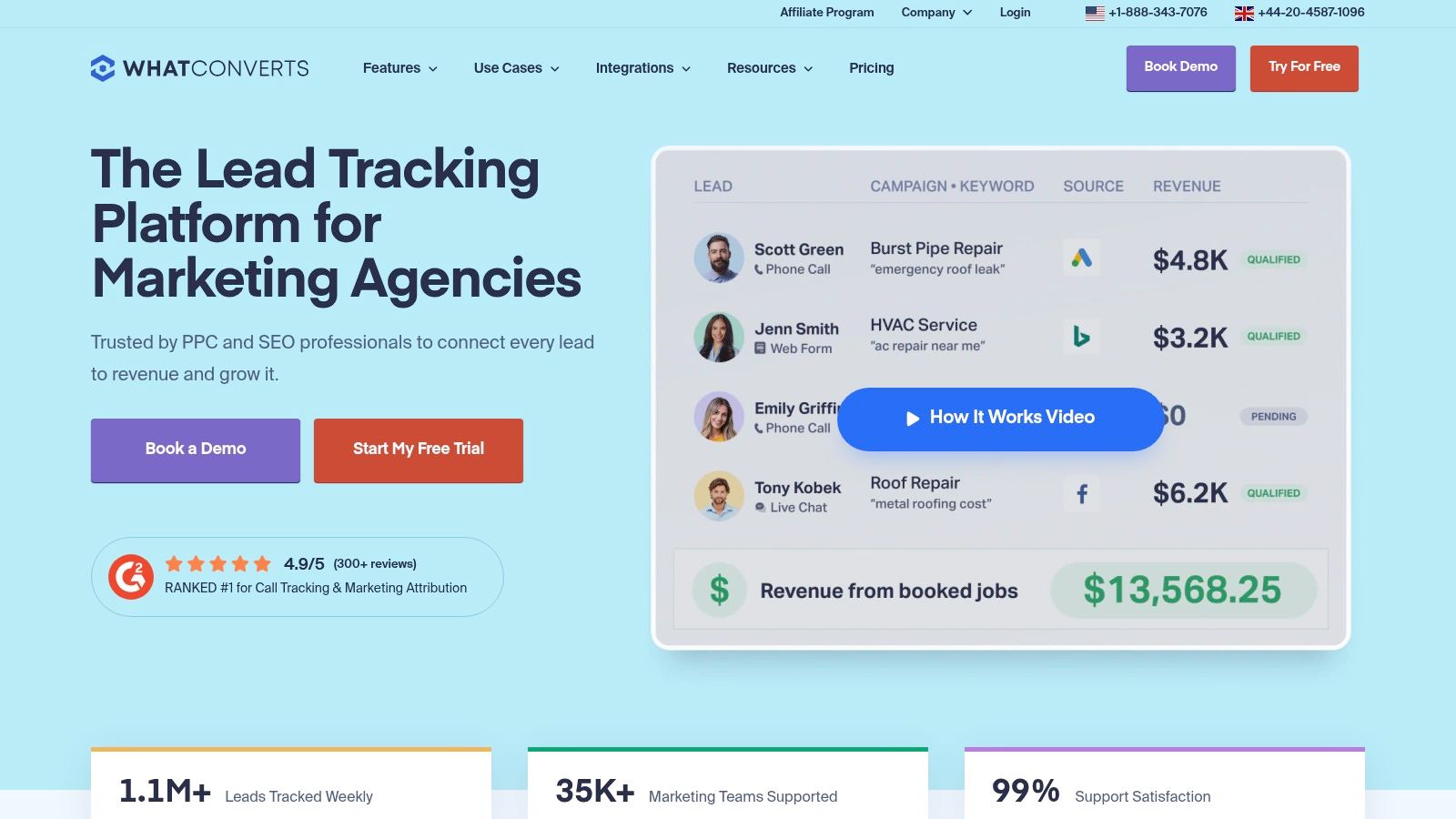
WhatConverts is worth considering when the missing information is inside your enquiries. It brings calls, forms, chats, transactions and marketing-source details into a lead-centred reporting system.
WhatConverts lists New Zealand Call Tracking plans from US$30 per month and Plus from US$60 per month, with a 14-day trial advertised; number and usage charges need checking separately. Its New Zealand-specific offering makes it a more direct local candidate than platforms that don’t list NZ support.
Why it suits phone-led roofing sales
Dynamic number insertion replaces the website phone number with a tracking number so calls can be associated with marketing sources. You can then review lead quality and send relevant conversion information back to Google Ads.
- Strong fit: An owner wants calls and quote forms together, rather than scattered across separate reports.
- Setup concern: Embedded forms, especially iframe-based forms, need explicit testing rather than an assumption that tracking works.
- Ongoing work: Somebody must classify enquiries and maintain the connection to sales outcomes.
Higher plans add features such as call flows and broader journey reporting. Don’t pay for those until you know which decision they’ll improve.
Signed-job verdict: A useful bridge between source and lead quality. Connecting the enquiry to an accepted quote still requires consistent job-outcome recording.
5. CallTrackingMetrics
Say your office handles reroofing enquiries, urgent repairs and commercial calls through different people. CallTrackingMetrics becomes more interesting when call handling matters alongside attribution.
It combines call tracking with routing, conversation analytics and attribution across calls, texts, forms and chat. Google Ads integration can return conversion information to the advertising account.
CallTrackingMetrics publishes Marketing Lite pricing from US$79 per month before usage charges, with numbers offered in more than 80 countries, subject to local requirements. That international footprint isn’t a substitute for confirming the New Zealand number type, documentation and minute rates you need.
More capability, more administration
Routing can help direct a repair enquiry to the right person. Conversation review can also help distinguish a genuine roofing opportunity from a supplier call, but neither removes the need to update job outcomes.
The trade-off is complexity. A small roofing team may not need a communications platform with extensive routing controls.
Before committing, map the actual call journey: who answers, what happens after a missed call, and where the outcome gets recorded. Include numbers, minutes and messaging in the cost comparison.
Signed-job verdict: Capable of supporting source-to-sale reporting through integrations and disciplined records. It’s harder to justify if all you need is campaign attribution for incoming calls.
6. CallRail
For a New Zealand roofer, availability is the first hurdle with CallRail. Don’t choose it purely because it appears in overseas agency recommendations.
CallRail lists call-tracking countries as the US, Canada, UK and Australia, not New Zealand, and publishes US entry pricing from US$50 per month, with possible additional usage. It’s therefore a more straightforward candidate for roofing businesses operating in its supported markets.
Useful features, with a geographical catch
CallRail offers call and text attribution, dynamic number insertion, recordings and conversation insights. Higher plans add form tracking and richer conversation features.
- Good fit: A roofing company in a supported country wants to connect campaign sources with call review.
- Weak NZ fit: Local number availability isn’t established by its published supported-country list.
- Cost concern: Included usage and higher-plan requirements matter as much as the advertised starting price.
Our guide to call-tracking software explains the practical role of attribution in assessing roofing enquiries. Regardless of platform, don’t treat call duration as a final quality score: a long conversation can still concern work you don’t offer.
Signed-job verdict: It can support the connection, but recordings and conversation insights don’t themselves establish that a quote was accepted. Your sales records still need to close that gap.
7. Ruler Analytics
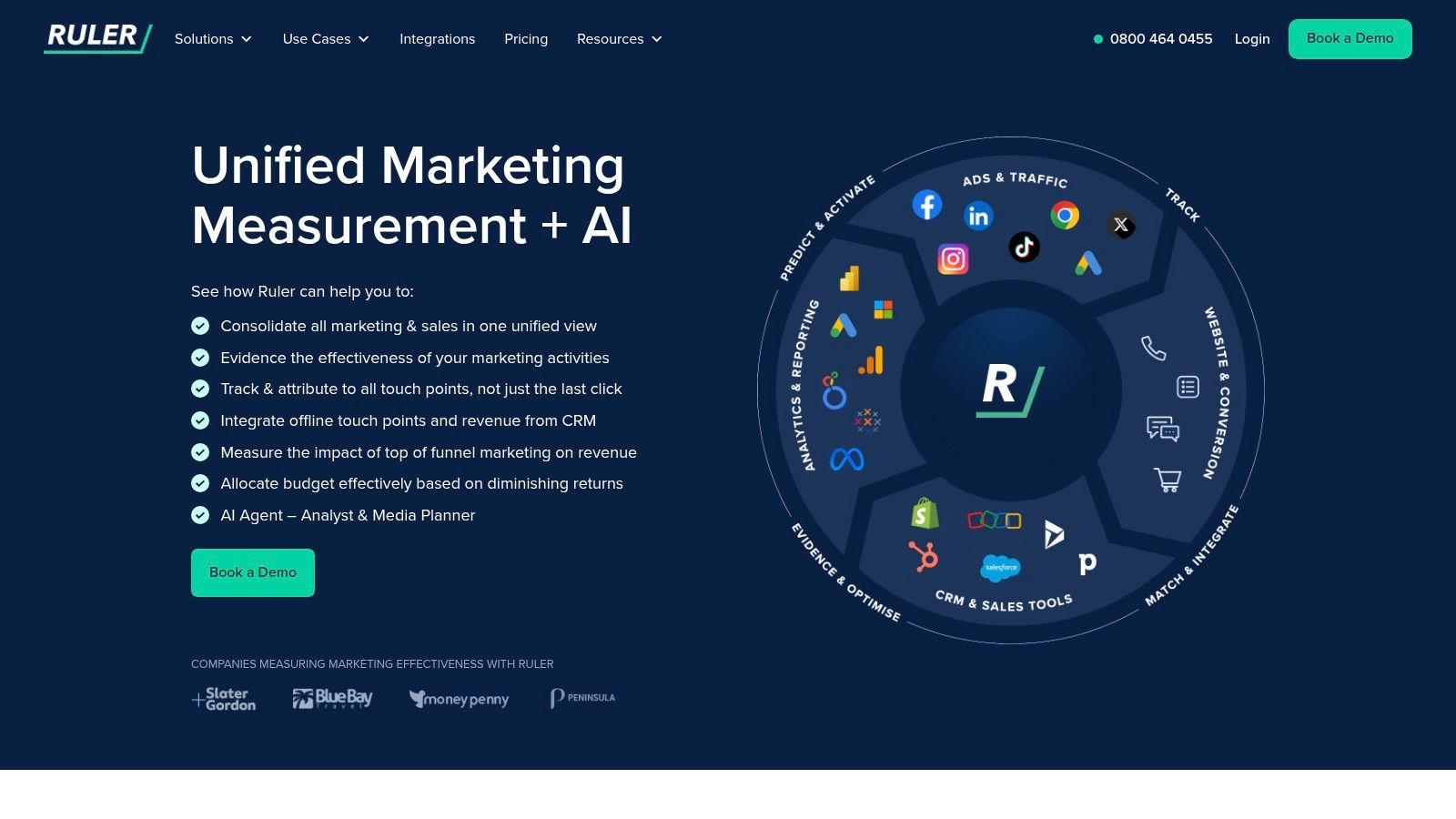
Ruler Analytics addresses a different question: which marketing interactions contributed to the revenue recorded in your sales system? That’s more ambitious than counting enquiries.
It connects marketing touchpoints with forms, calls, chat and integrated CRM outcomes. Ruler Analytics publishes Small plans starting at US$400 per month before annual discounts, with pricing dependent on traffic, integrations and requirements.
For a roofing company with a maintained CRM and several acquisition channels, that can be useful. For an owner whose accepted quotes live in email threads, the immediate priority is better record-keeping.
Buying rule: Don’t buy multi-touch attribution to compensate for missing won-job records. Fix the records first.
Where the extra spend makes sense
Consider Ruler when you need to compare paid search, organic traffic and other marketing touchpoints against downstream sales. Its integration options, onboarding and customer-success support are relevant when implementing that broader view.
The limitation is input quality. Duplicate contacts, missing job values and inconsistent sales stages make detailed attribution less trustworthy, not more.
Also verify how NZ phone attribution would work before choosing it as your local call-tracking solution. A broad integration list doesn’t establish local number suitability.
Signed-job verdict: A strong conceptual fit for revenue attribution, provided your CRM contains reliable outcomes and the required integrations are implemented.
8. Matomo
Choose Matomo for analytics control, not because it promises to qualify roofing calls. Its website goals can measure quote-form completions, conversion rates and acquisition sources.
Matomo offers a free self-hosted Community option alongside paid hosted Cloud plans, with Cloud Team listed from €230 per month and pricing tied to traffic. Self-hosting gives technically capable businesses more control over where analytics runs, but hosting and maintenance still require resources.
Control comes with responsibility
Somebody must manage installation, updates, access and infrastructure. Paid features, including expanded funnel analysis and support, can also change the overall cost.
- Useful capability: Define goals around successful quote requests instead of relying on page views.
- Operational trade-off: More control can mean more technical work.
- Clear limit: Matomo doesn’t replace dedicated telephone attribution or a job-management system.
Data control also isn’t automatic legal compliance. The New Zealand privacy law and practice guide explains that the Privacy Act 2020 applies where tracking involves information about identifiable people, making purpose, transparency and appropriate handling important.
Keep tracking disclosures clear and collect only what the measurement task needs.
Signed-job verdict: Useful for website conversion analysis. Linking an enquiry to signed work requires a separate sales-data connection.
9. Microsoft Clarity
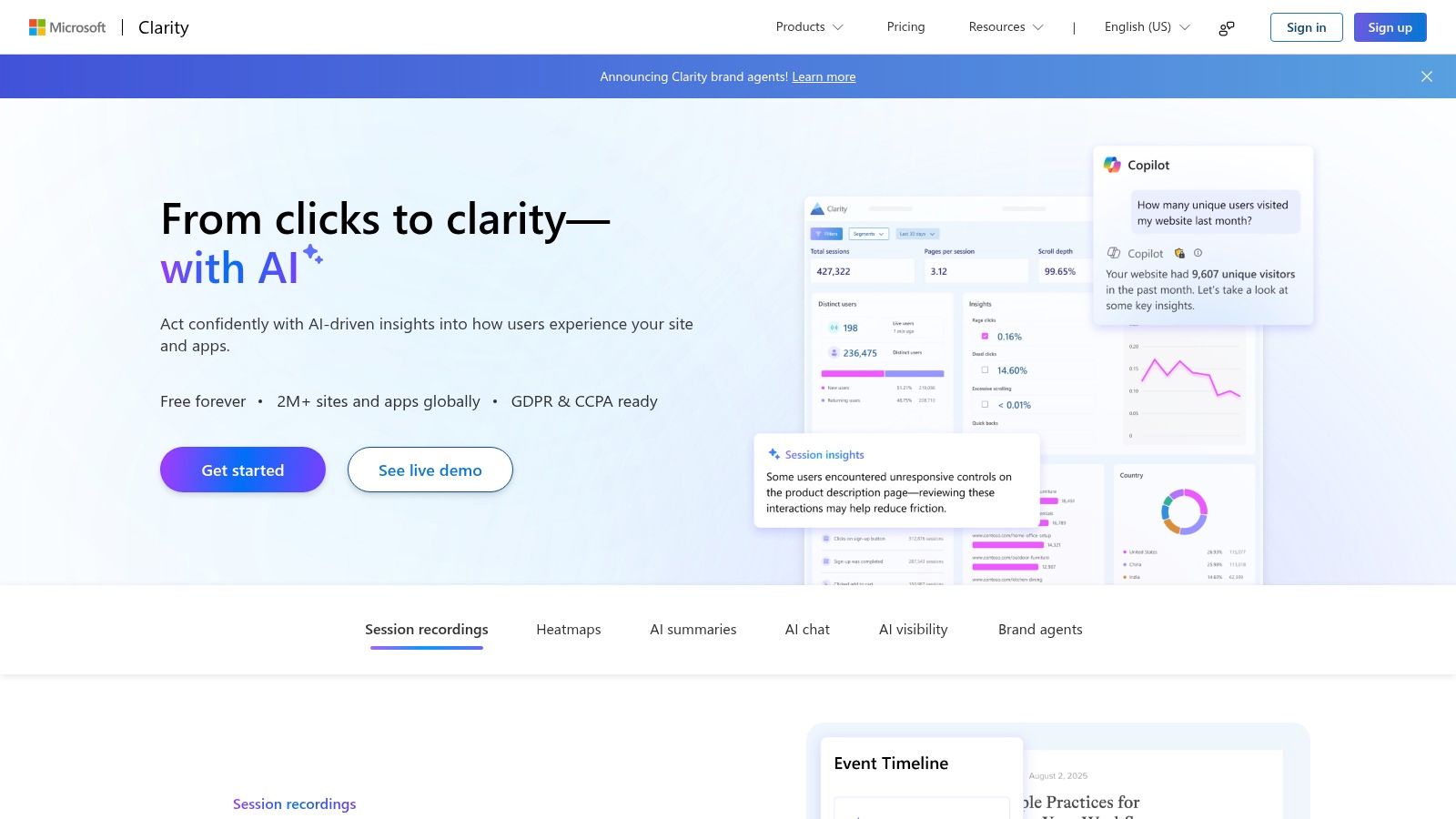
Visitors repeatedly tap something that looks like a quote button, but it isn’t clickable. Clarity helps you find that kind of landing-page problem.
Microsoft Clarity is free, with no traffic limit or forced upgrade according to Microsoft. It provides session recordings and click, scroll, attention and area heatmaps across desktop, tablet and mobile.
That makes it a useful companion to conversion tracking tools, not a replacement. You can investigate whether mobile visitors miss the phone button or abandon an awkward enquiry form, but you can’t establish lead quality from a replay.
Use it to answer a specific question
Start with a page where visitors aren’t completing enquiries. Review the relevant device and traffic segments, then inspect behaviour around the form or call-to-action.
Don’t spend an afternoon watching unrelated sessions without a decision to make. Purchase-oriented conversion maps also have limited direct relevance to a roofing quote journey.
Privacy needs attention. Check masking, avoid exposing personal information, and make sure your disclosures cover the collection.
Signed-job verdict: No, not on its own. Clarity explains possible website friction; your call platform and CRM establish whether the resulting enquiry became a job. Its value is helping you improve the page once reliable tracking identifies a problem.
10. Stape
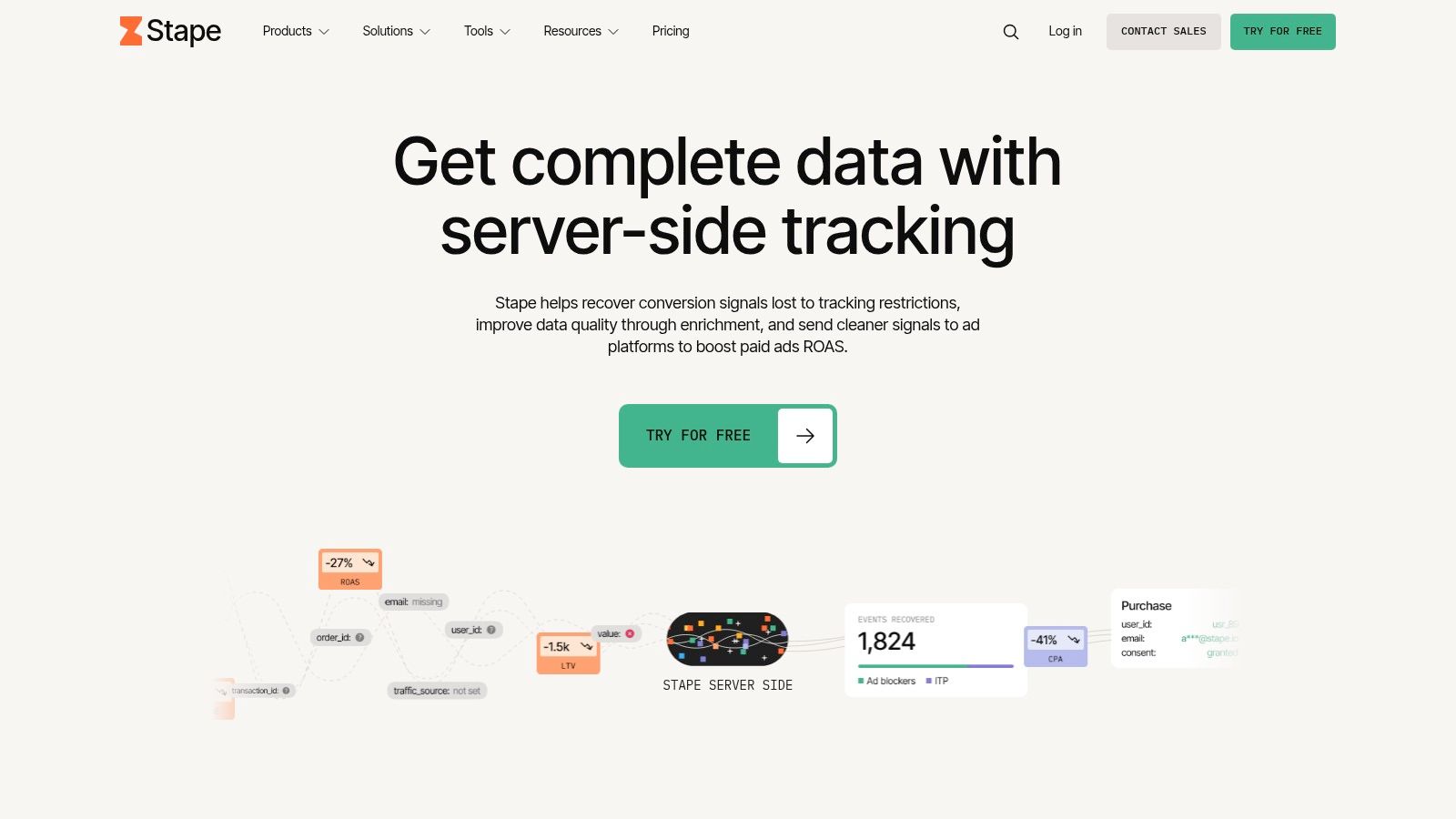
Stape belongs in a technical tracking setup, not in place of a lead-management system. It provides server-side Google Tag Manager hosting and gateway products for GA4 and Google Ads.
Stape lists a free server-side GTM plan up to 10,000 requests, Pro from US$17 per month, and a separate Gateway option from US$8 per month per domain when billed yearly. These are different products and billing arrangements, so compare the implementation you need.
What server-side tracking changes
Instead of relying only on browser tags sending information directly to platforms, you route relevant measurement through a server environment. Depending on configuration, this can support controlled tag routing, webhooks and offline conversion workflows.
- Useful for: An agency or technical team maintaining a deliberate measurement architecture.
- Not a shortcut: Server-side collection doesn’t remove privacy obligations or justify ignoring consent choices.
- Common mistake: Sending the same conversion through browser and server implementations without proper duplicate prevention.
Request volume, monitoring and specialist setup all affect the cost. Don’t add this layer while basic form tracking remains broken.
Signed-job verdict: It can transport outcome data when configured appropriately. It doesn’t determine whether a caller was qualified, maintain your quoting pipeline or record the signed contract for you.
How the 10 conversion tracking tools compare on cost, call tracking and best use
| Item | Starting cost | Call tracking | Best for |
|---|---|---|---|
| Google Ads conversion tracking | No separate subscription; ad spend is separate | Tracks phone calls and phone-link clicks; detailed attribution may need another tool | Measuring conversions from Google Ads |
| Google Analytics 4 (GA4) | Free standard version | Does not replace specialist call tracking | Website and traffic-source analysis |
| Google Tag Manager (GTM) | Free | Can deploy call-tracking tags; does not track calls by itself | Managing website tracking tags |
| WhatConverts | US$30/month for Call Tracking; US$60/month for Plus | Yes, with dynamic number insertion and lead attribution | Tracking calls and other leads by marketing source |
| CallTrackingMetrics | US$79/month, plus usage charges | Yes, including call attribution and routing | Combined lead attribution and call handling |
| CallRail | US$50/month starting US pricing, plus possible usage | Yes; New Zealand is not listed as a supported call-tracking country | Call attribution and conversation analysis in supported countries |
| Ruler Analytics | US$400/month starting price | Yes, alongside forms and chat | Connecting marketing touchpoints to leads and revenue |
| Matomo | Free self-hosted option; Cloud Team from €230/month | Does not replace dedicated phone call tracking | Website conversion analytics with data-control options |
| Microsoft Clarity | Free | No; behavioral analytics only | Understanding visitor behavior with recordings and heatmaps |
| Stape | Free up to 10,000 requests; Pro from US$17/month; Gateway from US$8/domain/month when billed yearly | No specialist call tracking | Server-side Google Tag Manager hosting and tracking |
Choose the Tool That Tracks a Booked Job, Not Just a Click
Start with Google Ads conversion tracking and GA4. Use GTM to maintain the implementation if your team can manage it properly. Together, these give you a practical foundation without another software subscription for standard tracking products.
Add a paid call-tracking platform when you need to identify which campaigns generate genuine telephone enquiries. For NZ roofers, WhatConverts is a sensible starting point for evaluation because of its explicit local offering. CallTrackingMetrics deserves consideration when routing and call handling are also operational needs.
Don’t begin with heavier attribution because the reports look impressive. Ruler becomes more useful when your CRM consistently contains qualified opportunities, accepted quotes and job values. Matomo, Clarity and Stape solve different measurement problems; none replaces those sales records.
Keep the outcome loop simple
Give each enquiry a durable record and preserve its source details where available. Add the service requested, location, qualification outcome and eventual job result.
- Separate sales stages: Distinguish a new enquiry from a qualified opportunity, quoted job and accepted quote.
- Record commercial value: Keep won-job value separate from quoted value and, where useful, assess margin in your own reporting.
- Reconcile monthly: Match tracked calls and forms against signed work, including duplicates, missed calls and enquiries outside your service area.
The commercial context matters. Stats NZ reported 33,600 new dwellings consented in the year ended December 2024, down 9.8% from the year ended December 2023. That measures approvals, not completed roofing work, but it reinforces the value of separating new-build enquiries from reroofing, repairs and maintenance when judging campaigns.
You don’t need to assign every job perfectly to a single click. You need dependable enough evidence to decide where the next advertising dollar should go.
Keep privacy practical too. Call-source and outcome tracking don’t require recording every conversation; the Electricity Authority’s privacy notice illustrates how an organisation explains its recording purposes. If you record calls, explain why and restrict access appropriately.
Review tracking against signed jobs every month. Cut tools that don’t contribute to a dependable path from spend to revenue, while retaining supporting tools that help you diagnose and improve that path.
Bluelight builds and manages Google Ads systems exclusively for roofers, including call tracking, form tracking, lead attribution and monthly reporting on which leads became jobs. Visit Bluelight to book a free 30-minute ad account review covering what’s working, where budget is leaking and the changes most likely to improve your results.
Related service Google Ads for Roofers